



Key Takeaways
Choosing a warehouse platform ladder in NZ starts with understanding the work being carried out, the height required and the conditions on site.
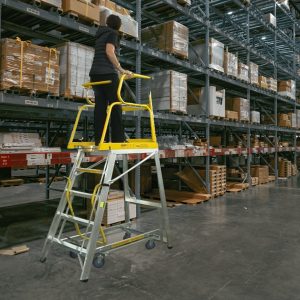
- Identify the tasks, working height and frequency of use before comparing models.
- Consider whether a fixed or mobile design best suits your workflow.
- Check platform dimensions, rated capacity, operating footprint and storage requirements.
- Confirm the model’s safety features, specifications and operating instructions.
- Consider delivery, maintenance, replacement parts and ongoing supplier support.
Choosing a Warehouse Platform Ladder NZ Business Can Rely On
Choosing a warehouse platform ladder NZ businesses can rely on means matching the equipment to the actual work, rather than simply the height that needs to be reached. Consider what staff need to access, what they may carry and how often they will use the equipment.
A warehouse may have different access requirements for regular order picking, replenishing shelves and occasional maintenance. These tasks can place different demands on equipment and the people using it.
Before comparing products, establish:
- The highest point staff need to reach.
- Whether workers need both hands free while performing tasks.
- Whether tools, stock or other materials will be carried.
- How frequently the ladder will be used.
- Whether access is required in one location or across several work areas.
Remember that platform height and working height are not necessarily the same measurement. Ask suppliers how they define each measurement and compare the information with the actual task.
| Warehouse task | What to establish | What to check |
|---|---|---|
| Picking stock | Highest shelf and frequency of use | Platform and working-height information |
| Maintenance | Tools and access position | Available working space and load capacity |
| Replenishment | Items handled at height | Rated capacity, including the user and items carried |
| Occasional checks | Where and how often access is needed | Storage footprint and ease of positioning |
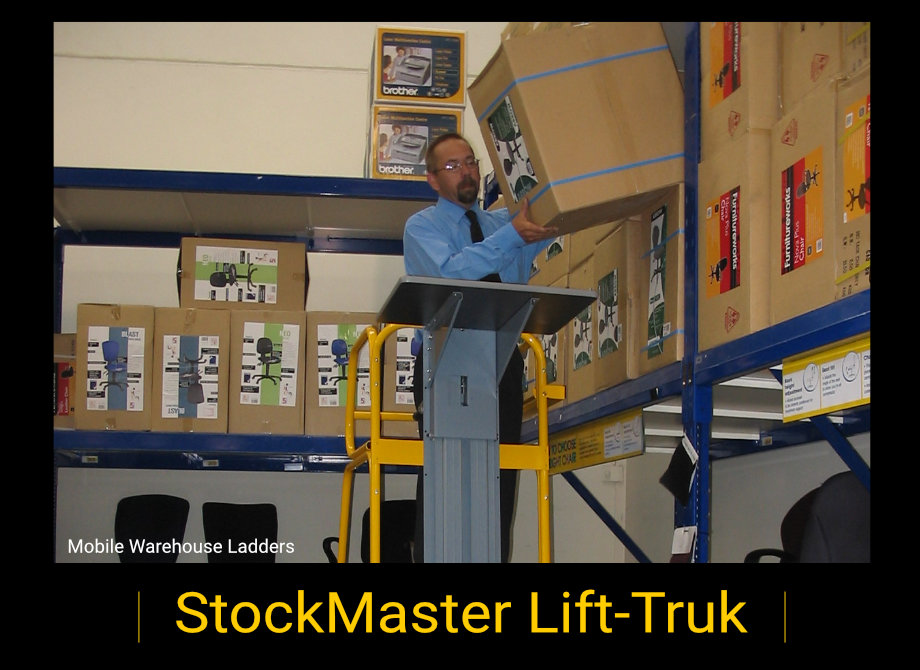
If elevated work also involves lifting or moving stock, consider whether separate goods-handling equipment is appropriate. For example, StockMaster’s Lift-Truk is a manually operated goods lift with a 60 kg safe working load. It is designed for lifting and handling goods, not for providing a platform for a person to work from. Check the current NZ product information for its specifications and intended use.
Mobile Warehouse Platform Ladders and Site Layout
The warehouse environment can influence which warehouse platform ladder is suitable for your site. Measure aisle widths and note floor transitions, ramps, uneven areas, overhead obstructions and nearby equipment.
A ladder that appears suitable on paper may be difficult to manoeuvre around a tight corner or may not fit comfortably in the intended working area.
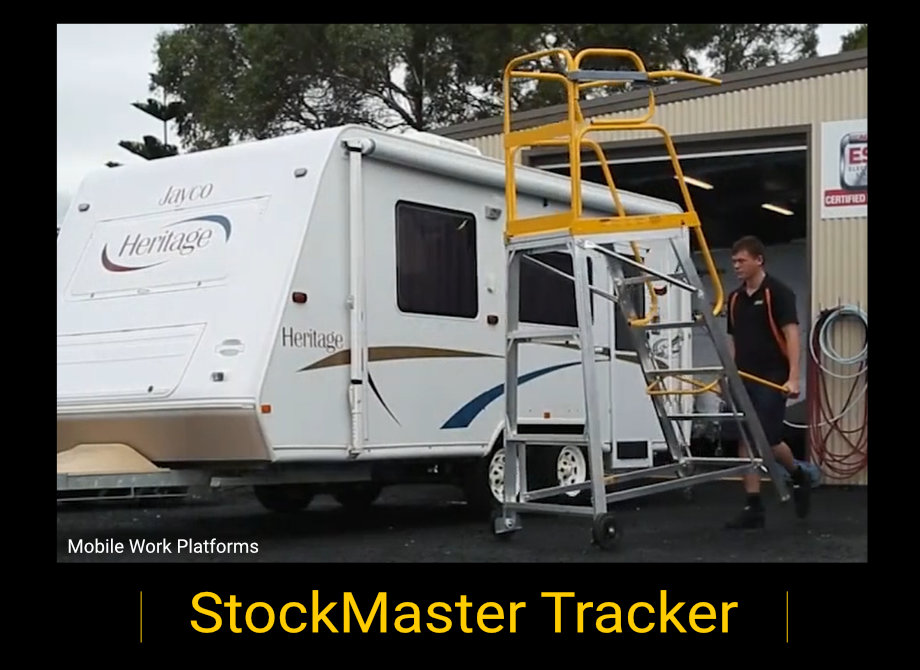
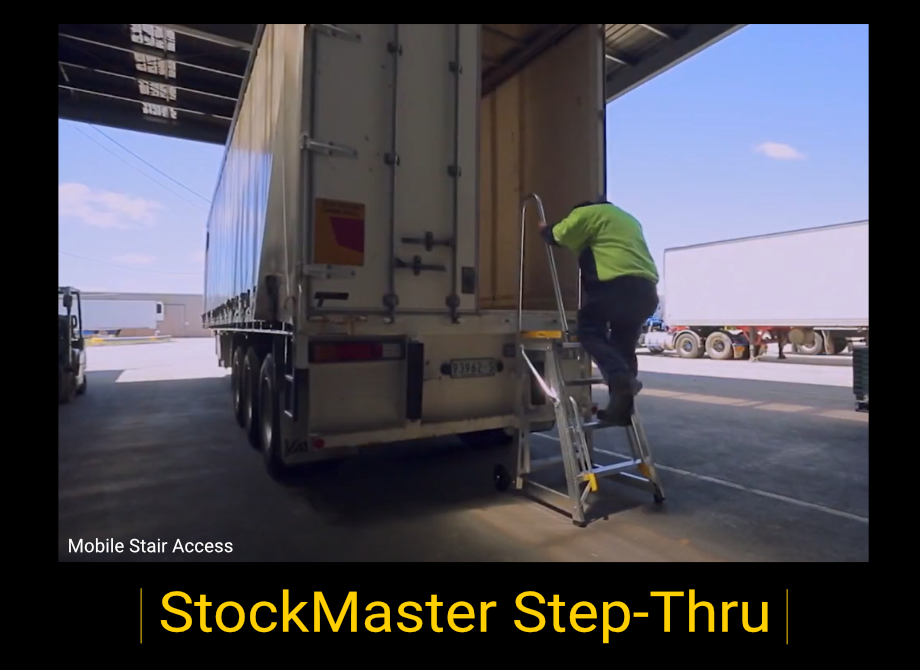
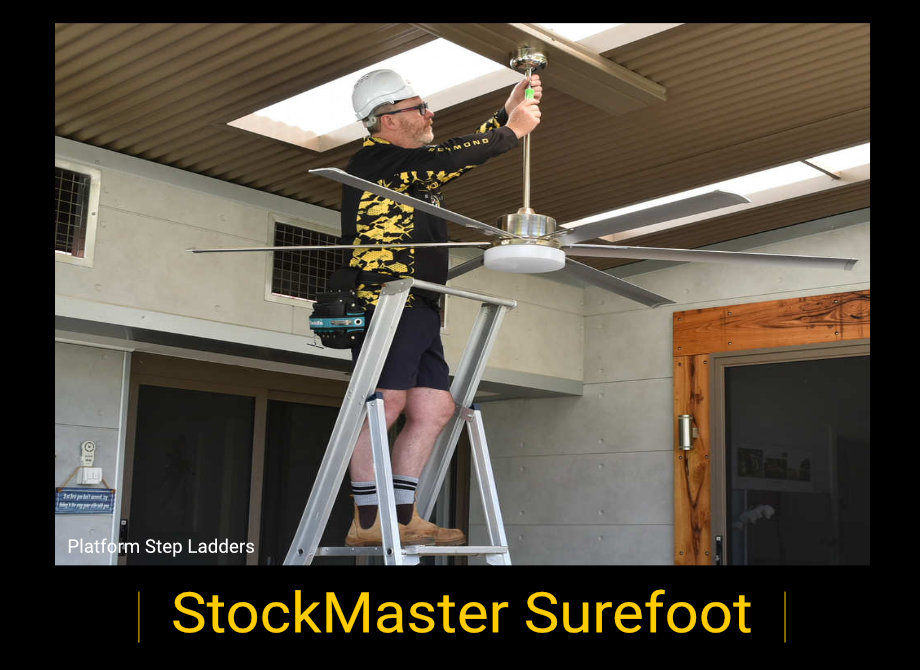
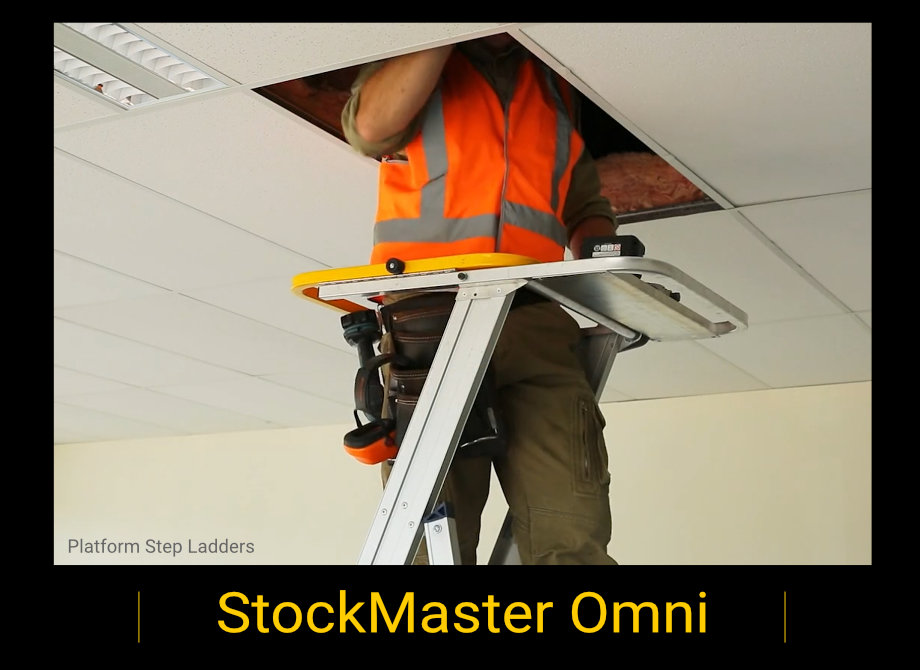
StockMaster NZ’s warehouse platform ladder range provides mobile access options for order picking, shelf stocking and other elevated warehouse tasks.
When assessing available space, consider both the operating footprint and the space required when the ladder is parked or stored.
Fixed and mobile ladder designs
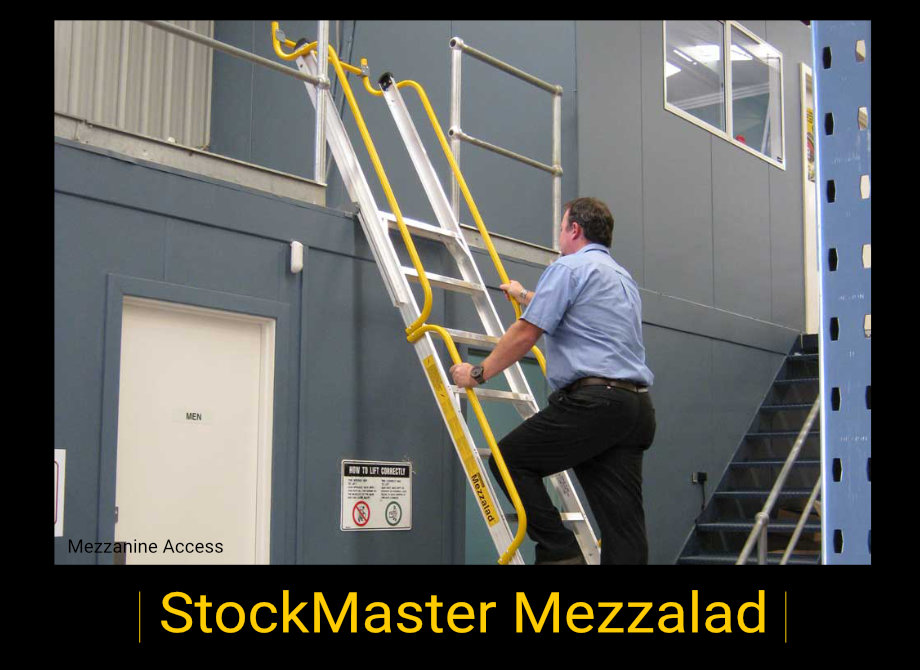
A fixed ladder may suit a designated access point where equipment is not regularly repositioned. A mobile platform ladder can be useful when staff need access in different areas of a warehouse.
For mobile equipment, consider the route between work areas, floor conditions and the space required to turn and position the ladder. The method used to move and secure the equipment also needs to suit the specific model and workplace.
Think about the entire working routine. A ladder that is moved regularly must fit the route and the way staff operate. Equipment kept in one location must still leave sufficient room for nearby work and emergency access.
Working Height and Platform Requirements
Measure the ladder’s dimensions while in use and when parked or stored. Allow for nearby racking, doorways, pedestrian routes and other equipment.
Check:
- The narrowest doorway and aisle along the intended route.
- Turning space at corners and between racking.
- Clearance around the ladder when positioned for work.
- Space required for access features to open and operate.
- Available storage space when the ladder is not in use.
For mobile models, ask the supplier how movement and positioning are managed. Do not assume that every mobile ladder is suitable for every floor surface or warehouse layout.
Compare Platform Features and Capacity
Once you understand the task and site requirements, compare the features of the models you are considering.
Platform dimensions should provide suitable space for the intended work without encouraging users to reach beyond a stable working position. Check the access arrangement, handholds, guardrails and gates, where fitted.
Features vary between models and configurations, so use the product documentation rather than assuming every warehouse platform ladder has the same design.
A useful comparison checklist includes:
- Is the platform suitable for the task and the items being carried?
- Can users access and leave the platform in a controlled way?
- Are guardrails and gates included, optional or unavailable?
- Can staff operate the access features comfortably?
- Does the design suit the frequency and type of work?
Check the rated load capacity
The rated capacity must account for the user and anything carried, in accordance with the manufacturer’s instructions. Do not estimate a ladder’s capacity from its size or appearance.
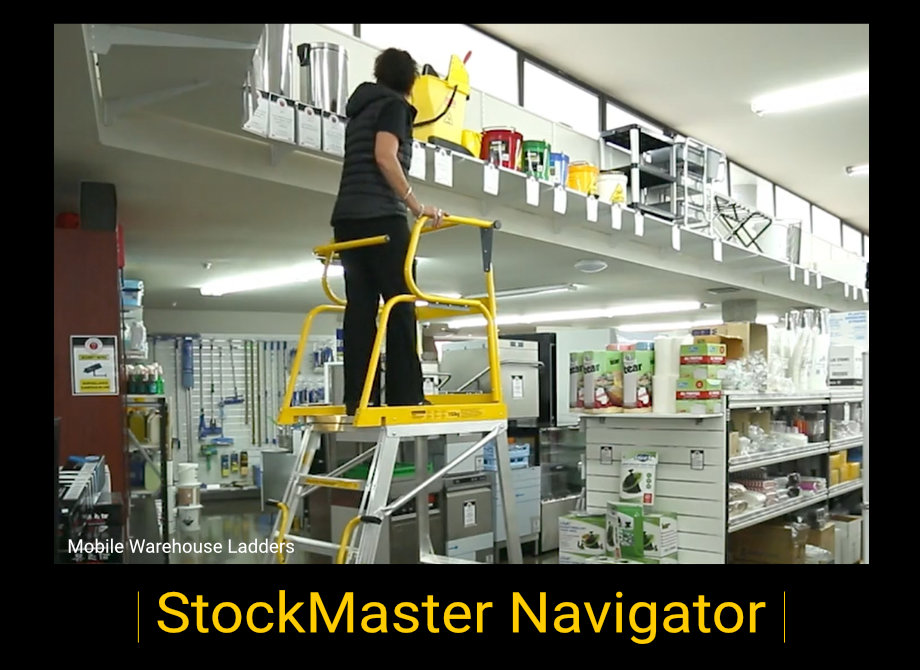
The StockMaster Navigator is a mobile warehouse platform ladder with a single control for moving and steering. Its four feet return to the ground for a stable working position.
The Navigator has a stated load rating of 150 kg. The PRO model includes an adjustable safety rail and automatic closing gate. Check the current NZ product information and the specific model configuration against your requirements before deciding whether it is suitable.
You can compare the available options in StockMaster NZ’s warehouse platform ladder range.
Consider how the ladder will be used
Look at how workers climb onto the platform, including step spacing, grip and handhold positions. Consider whether they need to carry tools or materials and whether the access arrangement suits the people who will use it.
Include operators in the selection process. Their experience can help identify practical issues with repeated climbing, moving equipment and accessing different work areas.
If the task or work method changes, reassess the equipment rather than assuming the original selection remains suitable.
Warehouse Ladder Safety and Stability
A warehouse platform ladder needs to suit the work method, the user and the conditions at the site. Review the supplier’s information for the exact model and configuration you intend to purchase.
Ask for:
- The model’s operating instructions.
- Rated load capacity.
- Overall and platform dimensions.
- Details of included safety features.
- Relevant safety and compliance information.
- Maintenance and inspection recommendations.
Check that the documents relate to the exact model, including any optional rails, gates or accessories. Where standards or other requirements are relevant, confirm the details with the supplier and your workplace health and safety adviser.
WorkSafe New Zealand provides guidance on working at height in New Zealand, including selecting and managing suitable access equipment. Its guidance explains that ladders and stepladders are generally intended for low-risk, short-duration tasks and that other equipment may be more appropriate depending on the work.
For further information, read WorkSafe’s guide to safe working with ladders and stepladders.
Your workplace should also have a clear process for operator familiarisation, pre-use checks, reporting faults and taking equipment out of service when necessary.
Compare Suppliers, Delivery and Ongoing Support
The purchase price is only one part of the decision. Delivery, assembly, maintenance and replacement parts can all affect the practical value of a warehouse platform ladder over time.
Choosing a warehouse platform ladder NZ businesses can depend on also means considering the supplier’s product knowledge, parts availability and ongoing support.
When requesting a quote, provide suppliers with your intended tasks, required height, site measurements and expected frequency of use. Ask for written specifications so you can compare equivalent models and configurations.
Confirm what is included in the price
Check whether the quoted price includes delivery, assembly or any handover information. Confirm the delivery location and expected timing, particularly if the equipment is needed for a specific warehouse project or operational change.
Read the warranty terms and understand what is covered and how a claim is handled. If assembly is required, establish who is responsible for completing it and checking the equipment before it enters service.
Ask about maintenance and replacement parts
Before purchasing, ask what routine checks and maintenance the supplier recommends and whether replacement parts are available for the model.
Consider where the ladder will be stored, who will be responsible for inspections and how faults will be reported. These arrangements help you assess the ongoing cost and practical requirements of ownership.
Inspect the equipment before use
Where a demonstration or inspection is available, use it to assess the build, access arrangement and operation against your site requirements.
Check the frame, steps, platform, joints and moving parts for visible damage or defects. Confirm that the equipment supplied matches the specification and configuration you ordered.
A visual inspection does not replace the manufacturer’s documentation. Follow the supplier’s instructions and do not use equipment if damage, a fault or an unresolved safety concern is identified.
For general consumer advice on selecting and checking ladders, Product Safety New Zealand also provides a useful guide: Ladders – choosing and using them safely.
Make Your Final Selection
Before accepting a warehouse platform ladder NZ suppliers offer, confirm that the model meets your operational and site requirements. compare the proposed model with your original task assessment and warehouse measurements.
Confirm the working-height requirements, rated capacity, platform dimensions, safety features, operating footprint and delivery arrangements. Make sure the people who will use the equipment understand its intended purpose and operating requirements.
The right warehouse platform ladder should support the work your team performs while fitting the available space and workplace procedures.
StockMaster NZ can help you identify a suitable mobile warehouse platform ladder for your application. Contact the team to discuss your warehouse access requirements and the available options.
Frequently Asked Questions
What should I consider when buying a warehouse platform ladder?
When buying a warehouse platform ladder, start with the work being performed, the height that needs to be reached and how frequently the ladder will be used. Then compare platform dimensions, rated capacity, safety features, mobility, storage requirements and the conditions at your site.
What is the difference between a fixed and mobile warehouse platform ladder?
A fixed ladder is intended to remain at a designated access point. A mobile platform ladder can be repositioned between work areas. The best option depends on the work pattern, available space, floor conditions and the specific model’s operating instructions.
How do I choose the correct platform height?
Identify the point staff need to reach and check how the supplier defines platform height and working height. Match the model to the task using its documented measurements rather than estimating from the ladder’s overall height.
What load capacity should I look for?
Check the supplier’s rated capacity for the exact model. Account for the user and any tools or materials carried, and follow the manufacturer’s instructions and any additional restrictions.
Can mobile warehouse platform ladders be used on uneven floors?
Suitability depends on the ladder’s design and the actual surface conditions. Check the manufacturer’s instructions and assess the floor, transitions, slopes and route where the ladder will operate. Do not assume every mobile model is suitable for every surface.
What safety features should I compare?
Depending on the model, relevant features may include guardrails, access gates, handholds and systems for positioning or securing the ladder. Confirm which features are included and how they are intended to operate on the specific model.
What should I ask the supplier before ordering?
Request the exact model’s dimensions, rated capacity, operating instructions, included features and relevant safety or compliance information. Also clarify delivery, assembly, warranty terms, maintenance recommendations and replacement-parts availability.
How often should a warehouse platform ladder be inspected?
Follow the manufacturer’s instructions and your workplace inspection procedures. Establish a routine for checking equipment, recording concerns and taking a ladder out of service if damage or a fault is found.